

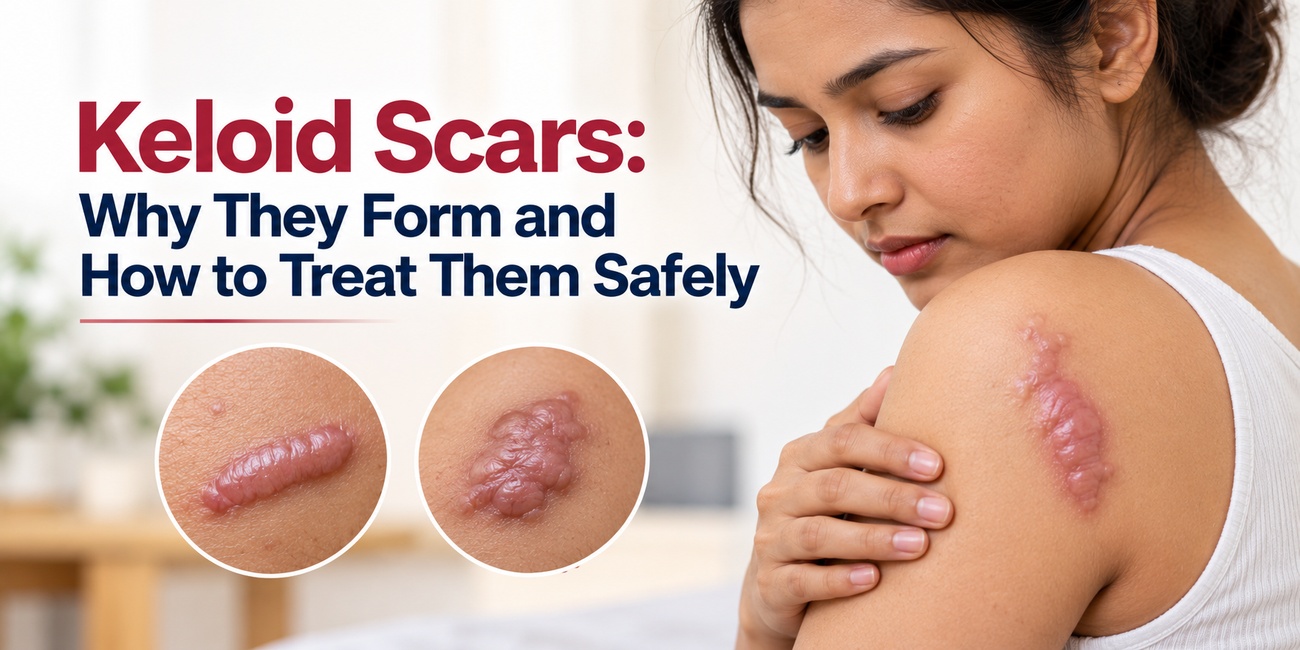
Keloid Scars: Why They Form and How to Treat Them Safely
A keloid scar is more than an ordinary mark left after an injury. It is a raised, firm area of scar tissue that can continue growing beyond the original wound. Keloids may develop after cuts, burns, acne, piercings, injections, or surgery and can sometimes cause itching, tenderness, or discomfort. Understanding the keloid causes and getting the right treatment early can help control their growth and improve their appearance. Since keloids can return after treatment, professional evaluation is important before choosing a procedure. At Sarin Wellness, dermatological assessment can help determine the most suitable approach based on the scar’s size, location, age, and previous treatment history.
What Is a Keloid Scar?
A keloid forms when the skin produces too much collagen while healing after an injury. Unlike a normal scar, it can grow beyond the original wound and become raised, thick, and sometimes darker than the surrounding skin. Keloids are benign and are not cancerous.
Keloids can appear on the chest, shoulders, back, jawline, neck, and ears. Their appearance and symptoms can vary from person to person.
What Are the Main Keloid Causes?
The exact reason some wounds develop keloids is not completely understood. However, several factors can increase the likelihood of developing them.
Common triggers and risk factors include:
- Previous keloid formation
- Family history of keloids
- Ear or body piercings
- Acne and chickenpox scars
- Surgical wounds
- Burns, cuts, or other skin injuries
- Certain genetic and skin-related factors
People who have developed a keloid before may be more likely to develop another one after a new injury.
How to Remove Keloid Scars Safely?
There is no single treatment that works equally well for every keloid. Dermatologists usually consider the scar’s size, location, thickness, symptoms, and whether it has been treated previously.
Corticosteroid Injections
Intralesional corticosteroid injections are commonly used to soften and flatten keloids. Several sessions may be needed, and treatment should be performed by a qualified dermatologist because incorrect use can cause unwanted skin changes. Evidence reviews support corticosteroid injections, often alongside silicone therapy, among established treatment approaches.
Silicone Gel or Sheets
Medical-grade silicone gel or sheets may help flatten keloids and are also used after certain injuries or procedures to reduce abnormal scar formation. They are generally used consistently over an extended period.
Laser and Other Procedures
Depending on the scar, dermatologists may consider laser-based procedures, cryotherapy, or other treatments. Laser treatment may sometimes be combined with corticosteroids to improve outcomes.
Surgical Removal
Surgery may be considered for large or resistant keloids. However, simply cutting out a keloid does not guarantee permanent removal because recurrence can be common. Therefore, additional treatment may be recommended after surgery to reduce the possibility of regrowth.
Why Professional Keloid Scar Treatment Matters
Trying to cut, burn, or aggressively treat a keloid at home can further injure the skin and potentially worsen scarring. A dermatologist can first confirm whether the growth is actually a keloid and then create a treatment plan according to its characteristics.
For people searching for keloid scar removal Delhi, choosing a qualified scar treatment dermatologist is especially important when the scar is growing, painful, itchy, or repeatedly returning.
Can Keloids Come Back After Treatment?
Yes. Recurrence is one of the main challenges of keloid management. Research shows that combining different treatment methods may be more useful than relying on a single approach in selected patients.
For this reason, follow-up care is often an important part of treatment. In suitable cases, doctors may recommend silicone therapy, pressure therapy, injections, or other measures after a procedure.
Conclusion
Keloids develop because of an abnormal healing response that produces excess scar tissue. Although they cannot always be prevented, early evaluation and appropriate treatment can help control their size, symptoms, and appearance. If you are wondering how to remove keloid scars safely, avoid self-treatment and consult a dermatologist. For personalised keloid scar treatment, Sarin Wellness can help assess your scar and discuss suitable treatment options based on your individual needs.
Frequently Asked Questions
Why do some people get keloid scars and others don’t?
Keloid formation depends on several factors, including genetics, previous keloids, skin characteristics, and the way an individual’s skin heals after an injury. Family history can also increase susceptibility.
Can keloid scars be removed permanently?
No treatment can guarantee that a keloid will never return. Recurrence is possible, particularly after surgery alone. Combining appropriate treatments and maintaining follow-up may help reduce the risk.
What is the best treatment for keloid scars?
There is no single best treatment for everyone. Corticosteroid injections, silicone therapy, cryotherapy, laser treatment, and surgery may be considered depending on the scar. A dermatologist can recommend the appropriate option.
Do keloids come back after treatment?
Yes, keloids can recur after treatment. The likelihood depends on factors such as the treatment used, scar location, size, and individual healing response. Follow-up treatment may help control recurrence.