
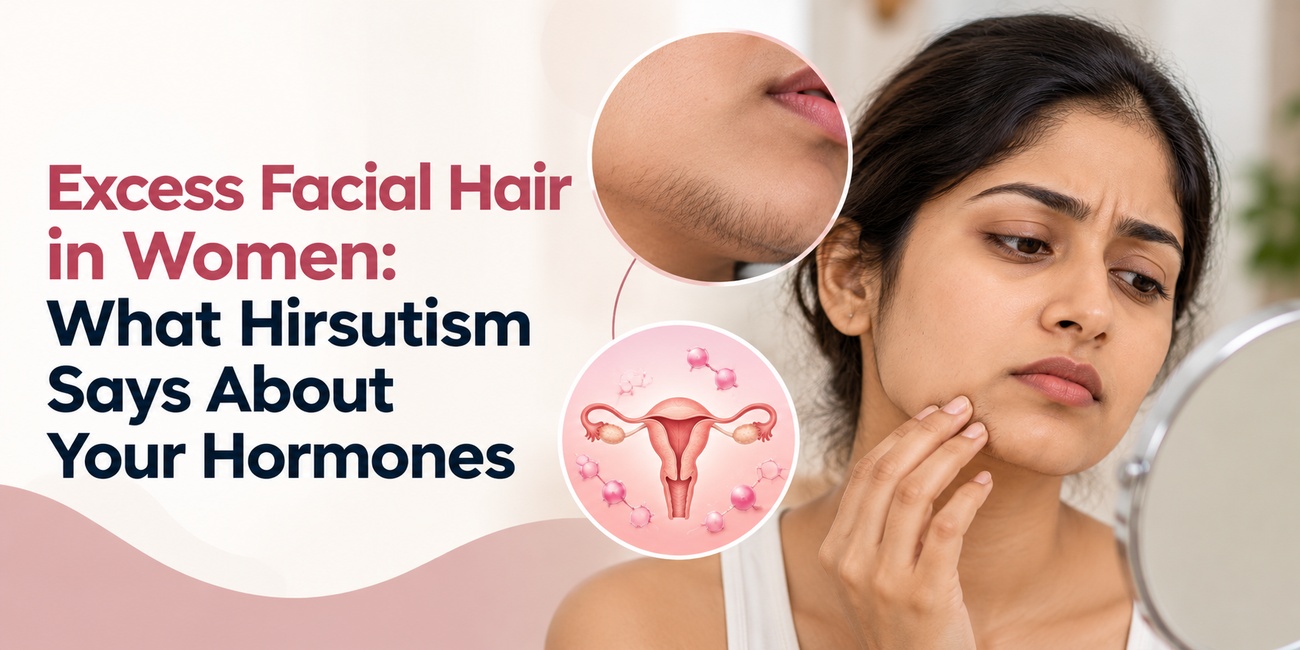
Excess Facial Hair in Women: What Hirsutism Says About Your Hormones
Excess facial hair in women can be more than a cosmetic concern. When coarse, dark hair appears on the chin, upper lip, jawline, chest, or abdomen, it may sometimes point to changes in hormone levels. This condition is commonly known as hirsutism and can be associated with conditions such as PCOS, hormonal imbalance, certain medications, or other health concerns. While occasional facial hair is normal, sudden or significant excess hair growth in women deserves attention, especially when accompanied by irregular periods, acne, weight changes, or scalp hair thinning. Understanding the possible hormonal connection is the first step toward choosing the right treatment. At Sarin Wellness, a proper evaluation can help identify the underlying cause and guide an appropriate approach to managing unwanted hair.
What Is Hirsutism in Women?
Hirsutism refers to the growth of coarse, dark hair in areas where women typically have fine or very little hair. These areas may include the face, chest, abdomen, back, or thighs.
The condition is often linked to increased androgen activity. Androgens are hormones that are naturally present in women but can cause excessive hair growth when their levels or effects become elevated.
Mild facial hair does not necessarily mean there is a hormonal problem. However, rapid or noticeable changes should not be ignored.
What Causes Excess Facial Hair in Women?
Several factors can contribute to unwanted facial hair. Common causes include:
- PCOS: Polycystic ovary syndrome is one of the most common hormonal causes of hirsutism.
- Higher androgen levels: Increased testosterone or sensitivity to androgens can stimulate coarse hair growth.
- Certain medications: Some medicines may influence hair growth.
- Adrenal or ovarian conditions: Less commonly, disorders affecting these glands can increase androgen production.
- Genetics: Some women naturally have more facial or body hair because of their family background.
A doctor may consider your symptoms, menstrual history, medications, and other health factors before recommending tests.
PCOS Facial Hair and Hormonal Changes
PCOS facial hair is often caused by increased androgen activity associated with polycystic ovary syndrome. Women with PCOS may notice coarse hair on the chin, upper lip, jawline, or sideburn area.
Other symptoms can include irregular periods, acne, difficulty with weight management, and thinning hair on the scalp. However, having facial hair alone does not confirm PCOS.
If several symptoms occur together, a medical assessment can help determine whether hormonal changes are involved.
What Hormones Are Linked to Hirsutism?
Androgens, particularly testosterone, play an important role in unwanted coarse hair growth. Another androgen called DHEAS may also be relevant in certain cases.
Hormonal evaluation may be considered when hair growth is significant, appears suddenly, or is accompanied by other symptoms. Depending on the situation, a doctor may recommend blood tests or further evaluation.
The goal is not simply to remove visible hair but to understand whether an underlying hormonal issue needs attention.
Hirsutism Treatment: What Options Are Available?
The appropriate hirsutism treatment depends on its cause, severity, and individual needs. Treatment may include medical management of an underlying hormonal condition along with cosmetic hair-reduction methods.
Common approaches include:
- Managing the underlying condition: If PCOS or another hormonal disorder is contributing to hair growth, treating that condition may help control new growth.
- Topical or prescription treatments: Certain medications can slow facial hair growth when medically appropriate.
- Hair removal methods: Threading, waxing, shaving, or other temporary methods can remove existing hair.
- Laser treatment: Laser-based hair reduction can provide longer-lasting reduction in unwanted hair.
A combination of approaches may be recommended depending on the individual case.
Does Laser Hair Removal Work for PCOS?
Laser hair removal PCOS treatment can help reduce unwanted facial and body hair by targeting hair follicles. It is generally more effective on darker, thicker hair because the laser targets pigment within the hair.
However, PCOS can continue to stimulate new hair growth because the underlying hormonal imbalance may remain. This means women with PCOS may require multiple sessions and occasional maintenance treatments.
Laser treatment should therefore be viewed as a hair-reduction approach rather than a treatment that cures PCOS itself.
When Should You See a Specialist?
Consider professional evaluation if facial or body hair:
- Appears suddenly or increases quickly
- Becomes noticeably thicker or darker
- Occurs along with irregular periods
- Is accompanied by severe acne or scalp hair thinning
- Appears with unexplained voice changes or other significant symptoms
Early evaluation can help identify whether hormones are contributing to the problem.
Conclusion
Excess facial hair in women can sometimes be a visible sign of hormonal changes, although it is not always caused by PCOS. Understanding the underlying cause is important before choosing a treatment. From managing hormonal conditions to laser-based hair reduction, several options may help control unwanted growth. If you are concerned about hirsutism or hormonal hair growth treatment, Sarin Wellness can help you understand suitable treatment options based on your individual needs.
Want to explore your options for unwanted facial hair? Consult the experts at Sarin Wellness for personalised guidance and a suitable treatment plan.
Frequently Asked Questions
1. Is excess facial hair in women always due to PCOS?
No. PCOS is a common cause, but genetics, medications, androgen sensitivity, and other hormonal conditions can also contribute to hirsutism. A proper evaluation is needed to identify the likely cause.
2. Can hirsutism be treated permanently?
Hirsutism can often be managed effectively, but permanent removal of every unwanted hair is not guaranteed. Treating the underlying cause and using suitable hair-reduction methods can provide longer-lasting results.
3. What hormone causes hirsutism in women?
Androgens, especially testosterone, are strongly associated with hirsutism. Increased androgen levels or increased sensitivity to these hormones can encourage coarse hair growth.
4. Does laser hair removal work for PCOS-related hair growth?
Yes, laser hair removal can reduce existing unwanted hair in women with PCOS. However, hormonal changes may cause new hair to develop, so multiple sessions and maintenance may sometimes be required.