

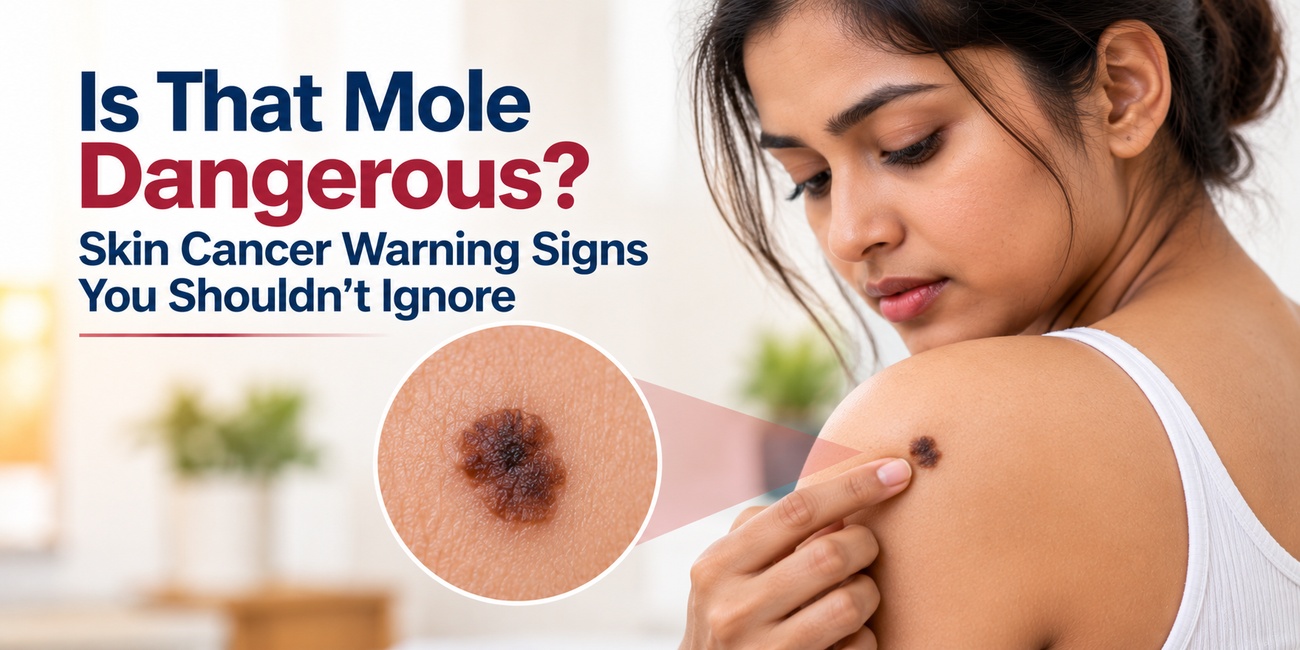
Is That Mole Dangerous? Skin Cancer Warning Signs You Shouldn’t Ignore
A mole can be a completely normal part of your skin, but changes in its appearance should not be ignored. Most moles are harmless, yet a new or changing mole can sometimes be an early sign of melanoma, the most serious form of skin cancer. Knowing the skin cancer warning signs can help you notice unusual changes early and seek professional advice when needed. Dermatologists commonly use the ABCDE rule for skin cancer to identify features that may need further examination. However, appearance alone cannot confirm whether a mole is cancerous. A professional mole check dermatologist can examine suspicious spots and recommend further evaluation if necessary.
What Makes a Mole Look Normal?
Normal moles can vary in size, shape and colour. They are commonly round or oval, have a relatively even colour and remain fairly stable over time. Some may be flat, while others are slightly raised.
A mole becoming irritated because it rubs against clothing does not automatically mean cancer. However, an adult who develops a new mole or notices a significant change in an existing one should pay attention to it.
ABCDE Rule for Skin Cancer: What Should You Look For?
The ABCDE rule skin cancer guide is a simple way to observe changes in moles and other pigmented spots.
- A – Asymmetry: One half of the mole looks different from the other.
- B – Border: The edges appear uneven, irregular, jagged or poorly defined.
- C – Colour: The mole has different shades, such as brown, black, red, white or blue.
- D – Diameter: The spot is larger than about 6 mm, although melanoma can be smaller.
- E – Evolving: The mole changes in size, shape, colour or appearance over time.
The E in ABCDE is particularly important because a changing spot can be more concerning than one that has remained stable for years.
Skin Cancer Warning Signs Beyond the ABCDE Rule
Not every suspicious skin lesion follows the classic ABCDE pattern. Other skin cancer warning signs can include:
- A mole or spot that repeatedly bleeds or develops a crust
- Persistent itching, tenderness or pain
- A sore that does not heal or heals and returns
- A new growth that continues to enlarge
- A spot that looks noticeably different from the others
- A dark streak or unusual pigmentation beneath a fingernail or toenail
Melanoma may also develop in areas that receive little sunlight, including the soles, palms and areas around or beneath the nails.
When to Worry About a Mole?
So, when to worry about a mole? There is no single size, colour or shape that proves a mole is cancerous. The most useful warning is a noticeable change.
You should consider seeing a dermatologist if a mole:
- Is new or looks different from your other moles.
- Changes in size, shape or colour.
- Starts itching, bleeding or becoming painful.
- Develops an unusual border or several colours.
- Continues changing over time.
These signs do not necessarily mean you have skin cancer. They simply indicate that the spot deserves professional attention.
How a Mole Check by a Dermatologist Helps
A mole check dermatologist can examine a suspicious spot more closely and determine whether it needs monitoring, removal or further testing. If skin cancer is suspected, a biopsy may be recommended. A biopsy examined under a microscope is required to confirm a diagnosis of skin cancer.
Regularly examining your skin can also help you notice changes. Check areas such as your face, scalp, neck, arms, legs, back, palms, soles and nails rather than focusing only on easily visible moles.
Conclusion
Knowing the skin cancer warning signs can make it easier to notice potentially concerning changes before they are overlooked. The ABCDE rule is useful for routine observation, but it cannot replace a professional examination. If you have a mole that is changing, bleeding, itching or simply looks unusual, consider getting it checked rather than waiting for it to settle on its own. Sarin Wellness provides professional dermatological care to help patients understand unusual skin changes and choose appropriate evaluation and treatment.
Frequently Asked Questions
What are the early warning signs of skin cancer on a mole?
A changing mole, irregular border, uneven colour, asymmetrical shape, growth, itching or bleeding can be warning signs. A new spot that looks different from your other moles should also be examined by a dermatologist.
How can I tell if a mole is dangerous or normal?
You cannot reliably determine this at home. Look for changes in size, shape, colour or symptoms using the ABCDE approach. If something looks unusual or keeps changing, professional evaluation is the safest option.
What is the ABCDE rule for checking moles?
ABCDE stands for Asymmetry, Border, Colour, Diameter and Evolving. It helps you recognise features that may indicate melanoma and identify moles that should be checked by a dermatologist.
When should I see a dermatologist about a mole?
See a dermatologist if a mole is new, changing, bleeding, itching, painful, or noticeably different from your other spots. Early evaluation can help identify skin cancer when it is more treatable.