

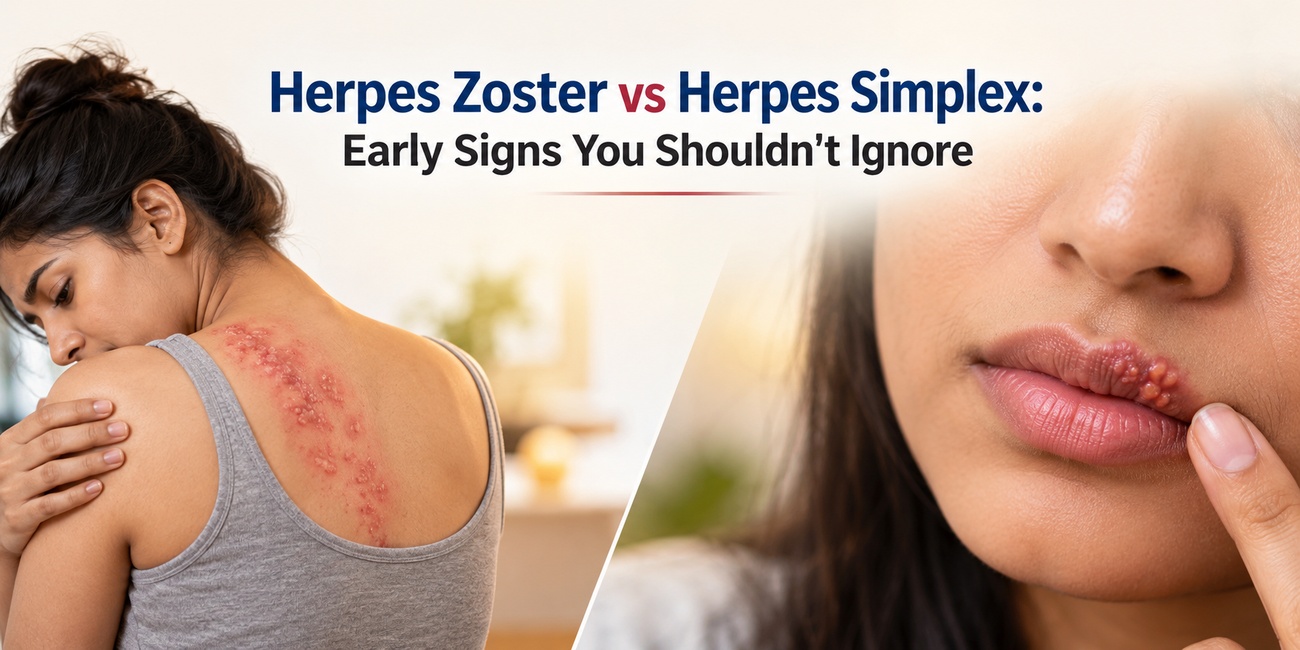
Herpes Zoster vs Herpes Simplex: Early Signs You Shouldn’t Ignore
A painful blistering rash can be worrying, especially when it is not immediately clear whether it is herpes zoster or herpes simplex. Although both conditions are caused by viruses from the herpes family, they are different infections with different patterns, triggers, and treatment approaches. Recognising the difference between shingles vs herpes can help you seek medical care at the right time. Early evaluation is particularly important for herpes zoster because starting treatment soon after symptoms appear may help reduce the risk of complications. In this guide, we explain the key herpes zoster symptoms, how shingles differs from herpes simplex, and when you should consult a dermatologist.
What Is the Difference Between Herpes Zoster and Herpes Simplex?
Herpes zoster, commonly called shingles, occurs when the varicella-zoster virus becomes active again after remaining dormant in the body following chickenpox. Herpes simplex is caused by HSV-1 or HSV-2 and commonly produces recurrent sores around the mouth or genital area.
Feature | Herpes Zoster | Herpes Simplex |
Common name | Shingles | Cold sores/genital herpes |
Main cause | Varicella-zoster virus | HSV-1 or HSV-2 |
Typical pattern | Usually one side of the body | Often localised around the mouth or genitals |
Pain | Often significant burning or nerve pain | Itching, tingling or soreness |
Recurrence | Less common | Often recurrent |
Because their symptoms can overlap, a medical examination is useful for confirming the diagnosis.
Herpes Zoster Symptoms to Watch For
Shingles often begins with symptoms before the characteristic rash becomes visible. These early warning signs may include:
- Burning, tingling or unusual sensitivity in one area
- Sharp or aching pain
- Itching or a feeling of numbness
- Headache or tiredness
- Mild fever in some people
- A red rash that later develops into fluid-filled blisters
One of the typical shingles early signs is pain or unusual skin sensitivity affecting a limited area, often on one side of the body. The rash may then appear along the path of a nerve.
Why Early Recognition Matters
Shingles can sometimes cause complications, particularly when it affects the face or area around the eye. Persistent nerve pain, known as postherpetic neuralgia, is another possible complication.
If you develop a painful blistering rash, especially near the eye, face or ear, consult a healthcare professional promptly rather than waiting for it to disappear.
Shingles vs Herpes: How Can You Tell?
The location and pattern of the rash can provide useful clues. Shingles commonly appears as a band or cluster of blisters on one side of the body. Herpes simplex usually causes smaller groups of blisters that may recur in the same general area.
However, appearance alone is not always enough. Other skin conditions can also cause redness, blisters, irritation or sores. A dermatologist may assess your symptoms, medical history and, when necessary, recommend testing.
Herpes Simplex Treatment Options
There is currently no treatment that permanently removes herpes simplex virus from the body. However, antiviral medicines may help shorten outbreaks and reduce the severity of symptoms when prescribed appropriately.
Herpes simplex treatment depends on factors such as the infection site, frequency of outbreaks and overall health. Some people may require treatment only during outbreaks, while others with frequent recurrences may be advised to take suppressive antiviral therapy.
Avoid touching sores unnecessarily and maintain good hand hygiene to reduce the chance of spreading the infection to other body areas or other people.
Herpes Zoster Treatment
The approach to herpes zoster treatment generally focuses on controlling the viral infection, pain and other symptoms. Antiviral medicines may be prescribed, particularly when treatment is started early.
Your doctor may also recommend suitable measures for pain relief and skin care. Do not self-medicate with antibiotics or steroid creams unless they have been specifically recommended by a healthcare professional.
If shingles involves the eye, immediate medical assessment is important because the infection can potentially affect vision.
When Should You See a Dermatologist?
Seek professional advice if you notice:
- A painful rash with grouped blisters.
- Burning or tingling followed by a rash.
- Blisters around the eyes, nose or face.
- Repeated unexplained sores.
- Severe pain, fever or rapidly spreading symptoms.
- Symptoms that do not improve as expected.
Early diagnosis can help determine whether you need antiviral treatment and reduce the risk of inappropriate self-treatment.
Conclusion
Understanding herpes zoster vs herpes simplex can help you recognise symptoms and seek appropriate care. While shingles commonly causes one-sided nerve pain followed by a rash, herpes simplex tends to cause recurrent sores around specific areas. Both conditions can be managed, but the right treatment depends on the underlying infection. If you notice shingles early signs or recurring sores, consult a qualified dermatologist rather than relying on appearance alone. Sarin Wellness can help you understand your symptoms and choose an appropriate treatment approach based on professional evaluation.
Frequently Asked Questions
What is the difference between herpes zoster and herpes simplex?
Herpes zoster is caused by reactivation of the varicella-zoster virus and usually produces a painful, one-sided rash. Herpes simplex is caused by HSV-1 or HSV-2 and commonly causes recurrent oral or genital sores.
Can herpes zoster (shingles) occur more than once?
Yes. Although many people experience shingles only once, it can recur. The risk may be higher in people with certain health conditions or weakened immunity.
Is herpes zoster contagious?
Shingles itself is not spread from person to person as shingles. However, fluid from active shingles blisters can transmit the varicella-zoster virus to someone who has never had chickenpox or vaccination, potentially causing chickenpox.
What are the early symptoms of shingles?
Common early symptoms include burning, tingling, itching, unusual skin sensitivity and pain in a particular area. A rash with fluid-filled blisters may appear later.