

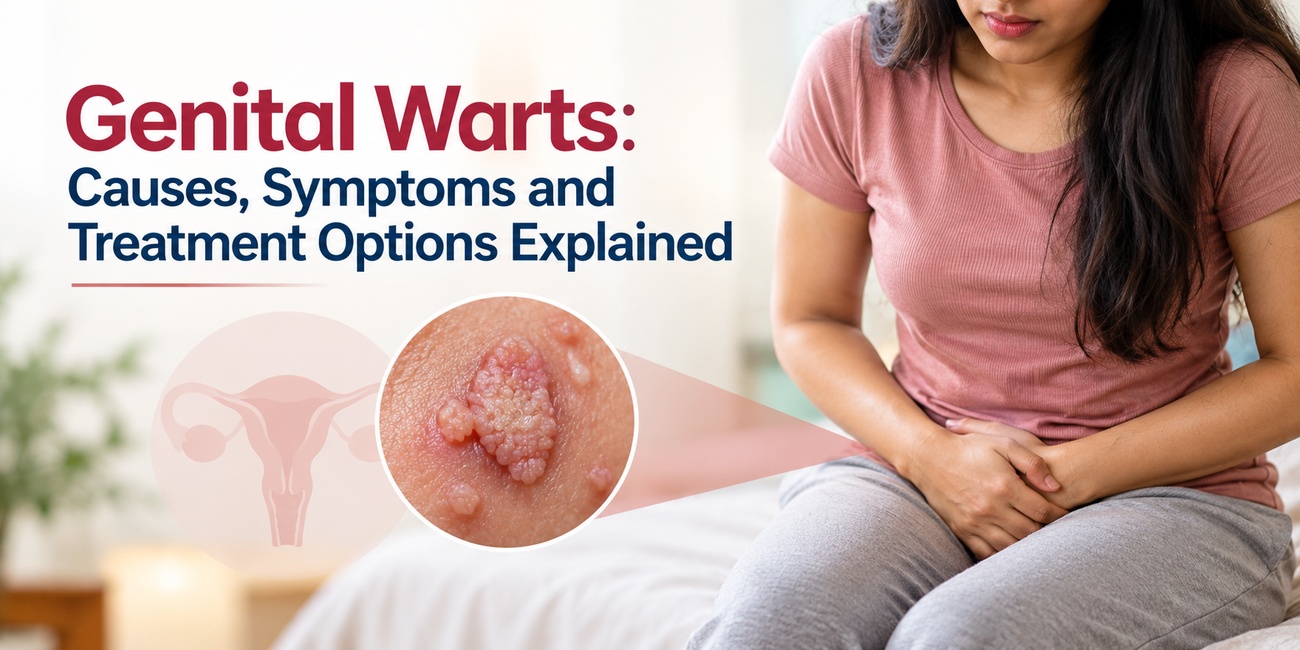
Genital Warts: Causes, Symptoms and Treatment Options Explained
Genital warts are small growths that develop around the genital or anal area and are usually caused by certain types of human papillomavirus (HPV). They can affect people of any sex and may appear weeks, months, or even years after HPV infection. Understanding genital warts causes, recognizing HPV warts symptoms, and knowing the available treatment options can help people seek appropriate medical care without unnecessary worry. Although genital warts are usually not dangerous, they can spread through sexual contact and may return after treatment. Early medical evaluation can help confirm the diagnosis and guide suitable care. Sarin Wellness provides professional guidance for individuals looking for safe and appropriate management of genital skin concerns.
What Are Genital Warts?
Genital warts are usually soft, flesh-coloured or slightly darker growths that appear on or around the genitals, anus, groin, or nearby skin. They may occur as a single bump or develop in clusters.
Some warts are easily visible, while others can be very small and difficult to notice. A healthcare professional can examine suspicious growths and determine whether they are genital warts or another type of skin condition.
Genital Warts Causes
The main cause of genital warts is infection with certain strains of HPV. HPV is a common virus transmitted primarily through intimate skin-to-skin contact.
Common ways HPV may spread include:
- Vaginal, anal, or oral sexual contact
- Genital skin-to-skin contact
- Contact with an infected area even when visible warts are absent
Using condoms can reduce the risk of HPV transmission, but it cannot provide complete protection because HPV can affect areas that are not covered.
HPV Warts Symptoms to Watch For
Not everyone with HPV develops visible warts. When symptoms occur, they may include:
- Small bumps around the genitals or anus
- Flesh-coloured, pink, grey, or slightly darker growths
- Several bumps grouped together
- Growths with a rough or cauliflower-like appearance
- Itching, irritation, or discomfort in some cases
Genital warts are often painless. However, bleeding or persistent discomfort should be evaluated by a healthcare professional rather than assumed to be caused by warts.
Genital Warts Treatment Options
The right genital warts treatment depends on factors such as the location, number, size, and appearance of the warts. Treatment focuses on removing visible warts and managing symptoms. It does not necessarily eliminate HPV from the body.
Prescription Treatments
Depending on the situation, a doctor may recommend medicines applied directly to the affected area. These should only be used as advised because genital skin can be sensitive.
Cryotherapy
Cryotherapy involves freezing the wart with a specialised substance. The treated tissue gradually falls away, and multiple sessions may sometimes be required.
Electrosurgery or Surgical Removal
For certain larger, persistent, or difficult-to-treat warts, a healthcare professional may recommend procedures such as electrosurgery or surgical removal.
Laser Treatment
Laser treatment may be considered for selected cases, particularly when warts are extensive or have not responded adequately to other approaches.
Genital Warts Removal: What to Expect
Genital warts removal does not guarantee that HPV itself has been eliminated. Even after visible warts disappear, recurrence can occur because the virus may remain in the body.
Avoid attempting to cut, burn, or use ordinary over-the-counter wart removers on genital skin. These products may cause significant irritation or injury.
A professional assessment is especially important when a growth is unusual, rapidly changing, bleeding, or has not been diagnosed previously.
Can HPV Vaccine Prevent Genital Warts?
The HPV vaccine warts connection is important because vaccination can protect against HPV types that commonly cause genital warts. Vaccination is most effective when given before exposure to HPV, but recommended age groups and vaccination schedules vary.
The vaccine does not treat existing genital warts. People should discuss vaccination with a qualified healthcare professional to understand whether it is appropriate for them.
When Should You See a Doctor?
Seek medical advice if you notice:
- New growths around the genital or anal area
- Unexplained genital itching or irritation
- Bleeding from a growth
- Warts that are increasing in size or number
- A growth that has not been medically diagnosed
A timely consultation can help distinguish genital warts from other conditions that may look similar.
Conclusion
Understanding genital warts causes, symptoms, prevention, and treatment can make it easier to take the right steps when unusual growths appear. While genital warts are generally manageable, professional diagnosis is important because different skin conditions can have similar appearances. Treatments such as prescription medicines, cryotherapy, and procedural removal may be considered according to individual needs. HPV vaccination can also help prevent infection with HPV types responsible for genital warts. For professional guidance and personalised care, consult the specialists at Sarin Wellness.
Frequently Asked Questions
What causes genital warts and are they contagious?
Genital warts are mainly caused by certain types of HPV and can spread through intimate skin-to-skin contact. A person may transmit HPV even when visible warts are not present.
Can genital warts go away on their own?
Yes, genital warts may sometimes disappear without treatment as the immune system responds to HPV. However, they can also persist or return, so medical evaluation is advisable.
What are the treatment options for genital warts?
Treatment may include prescription medicines, cryotherapy, electrosurgery, surgical removal, or laser treatment. The suitable option depends on the location, size, and number of warts.
Is HPV vaccine effective against genital warts?
Yes. HPV vaccines protect against HPV types that commonly cause genital warts. They are primarily preventive and do not remove existing warts or treat an existing HPV infection.