

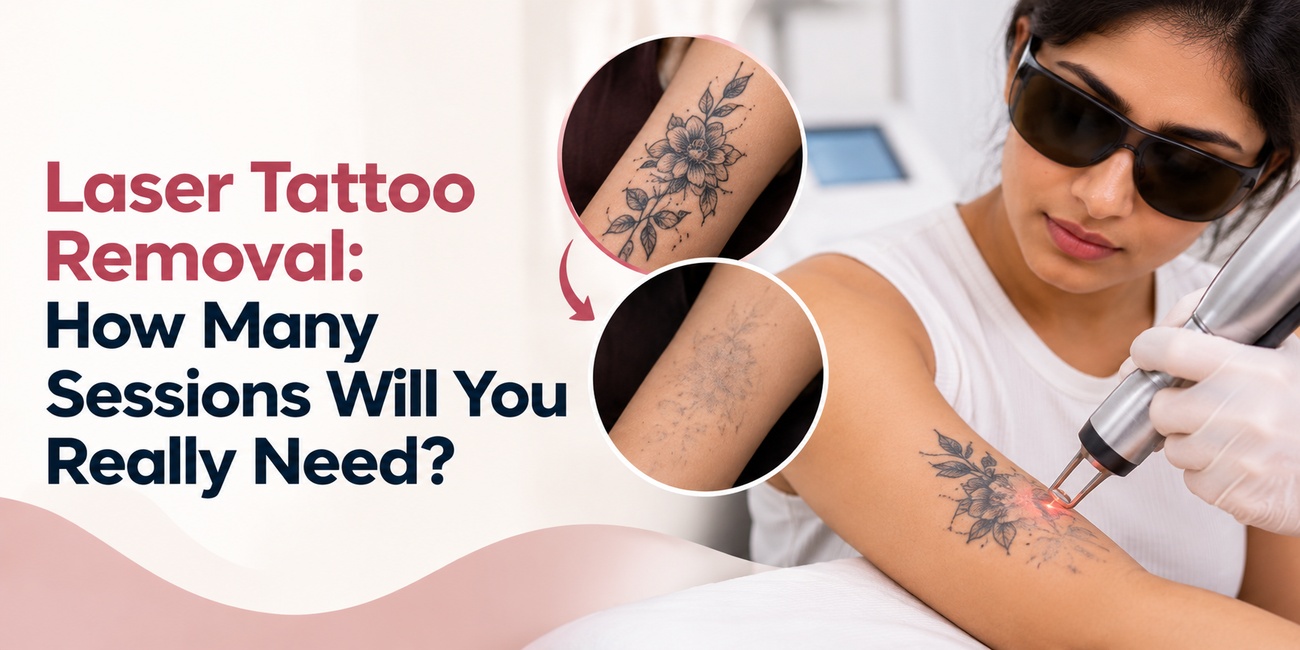
Laser Tattoo Removal: How Many Sessions Will You Really Need?
Getting a tattoo may feel permanent, but changing your mind does not mean you have to live with it forever. Laser tattoo removal has become one of the most commonly used approaches for reducing or removing unwanted tattoo ink. However, one of the first questions people ask is: “How many sessions will I need?” There is no single number that works for everyone. The number of tattoo removal sessions depends on factors such as ink colour, tattoo size, ink depth, location, age of the tattoo, and the individual’s skin response. Modern laser technology can break tattoo pigment into tiny particles that the body gradually clears.
How Many Tattoo Removal Sessions Are Usually Needed?
Many tattoos require multiple treatments rather than a single appointment. The FDA notes that 6–10 treatments may be needed for tattoo removal, although some tattoos can require more.
A dermatologist assesses the tattoo before recommending a treatment plan. Factors commonly considered include:
- Tattoo size: Larger tattoos generally require more treatment time.
- Ink colour: Black and dark blue inks often respond more readily, while some colours such as green, yellow and red can be more challenging.
- Ink depth: Deeper pigment may take longer to break down.
- Tattoo age: Older tattoos may sometimes respond differently from newer, densely pigmented tattoos.
- Body location: Blood circulation and the body area can influence how quickly pigment particles are cleared.
- Skin characteristics: Your skin type and individual healing response also matter.
Why Do You Need Multiple Laser Tattoo Removal Sessions?
Laser treatment does not simply erase the tattoo in one sitting. The laser energy breaks the pigment into smaller particles, after which the body’s natural processes gradually clear them.
Tattoo ink is also deposited in layers. Trying to remove too much pigment in one session can increase the risk of unwanted skin reactions. Allowing adequate recovery time between treatments is therefore an important part of the process.
What Happens Between Sessions?
After treatment, the tattoo usually becomes progressively lighter. The skin needs time to heal and the body needs time to clear the fragmented pigment before another session is performed.
For this reason, rushing treatments is generally not recommended. Your dermatologist can determine when the skin is ready for the next session.
Does Tattoo Colour Affect the Number of Sessions?
Yes. Tattoo colour can make a significant difference. Dark blue and black pigments are generally easier to target, while green, yellow and red pigments may be more resistant depending on the laser wavelength used.
Modern laser systems can use different wavelengths for different pigments. Some picosecond and Q-switched laser systems have specific indications for different tattoo colours and skin types.
What About Laser Tattoo Removal Cost?
The laser tattoo removal cost varies from person to person. A clinic may consider the tattoo’s size, number of areas being treated, laser technology, number of sessions required and complexity of the tattoo.
Instead of choosing a clinic only because it offers a lower price per session, consider the experience of the medical professional, technology being used and whether the treatment plan is customised for your tattoo.
Tattoo Removal Side Effects: What Should You Expect?
Temporary redness, swelling, soreness and minor blistering can occur after laser treatment. Changes in skin pigmentation may also happen. Less commonly, complications such as burns, scarring or changes in skin texture can occur, particularly when treatment is not performed appropriately.
Following aftercare instructions and having treatment performed by a qualified professional can help reduce avoidable risks.
Looking for Tattoo Removal Delhi?
If you are considering tattoo removal Delhi, start with a professional consultation rather than assuming a fixed number of sessions. At Sarin Wellness, the treatment plan can be evaluated according to your tattoo’s colour, size, location, pigmentation and skin characteristics.
The goal is to set realistic expectations rather than promise instant results. Since complete removal is not always possible, an appropriate assessment is important before beginning treatment.
Conclusion
The number of tattoo removal sessions you need depends on your individual tattoo and how your skin responds to treatment. While 6–10 sessions is a commonly cited range, some tattoos may need fewer or considerably more treatments. Laser technology, ink colour, tattoo depth, size and treatment spacing all influence the outcome. A personalised assessment at Sarin Wellness can help you understand the likely treatment journey and make an informed decision.
Frequently Asked Questions
1. How many sessions does laser tattoo removal usually take?
Many tattoos require around 6–10 sessions, but the actual number varies. Tattoo size, colour, ink depth, location and individual response can all affect treatment requirements.
2. Does laser tattoo removal completely remove a tattoo?
Complete removal is not guaranteed. Some tattoos can be significantly lightened or removed, while certain pigments may remain visible after treatment.
3. Is laser tattoo removal painful?
It can cause discomfort, often described as a snapping or stinging sensation. A topical numbing cream may be used in appropriate cases to make treatment more comfortable.
4. How long is the gap needed between tattoo removal sessions?
Several weeks are generally needed between treatments so the skin can heal and the body can clear the fragmented tattoo pigment. The exact interval should be decided by your treating professional.