

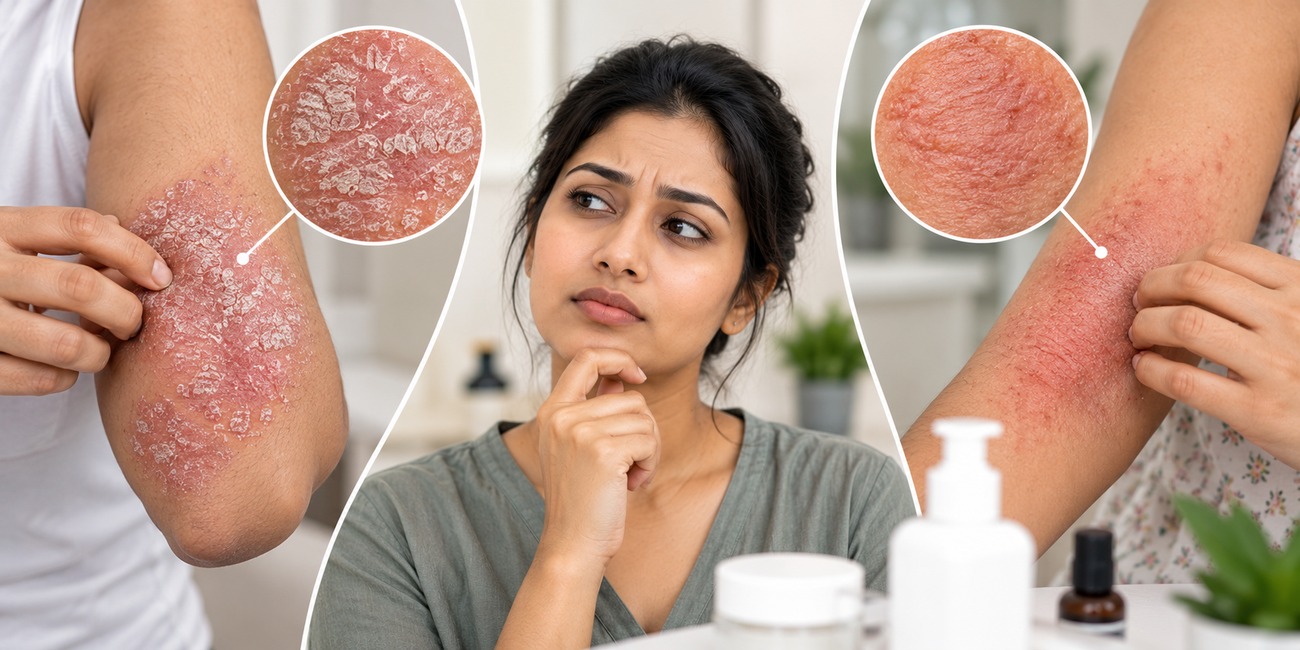
Psoriasis vs Eczema: How to Tell the Difference (and Treat Each)
Skin conditions can sometimes look surprisingly similar, making it difficult to know whether a rash is caused by psoriasis or eczema. Both can cause redness, itching, dryness, and irritation, but they are different conditions with different triggers and treatment approaches. Understanding psoriasis vs eczema can help you recognise common warning signs and seek appropriate care sooner.
While eczema is often linked to a sensitive skin barrier and environmental triggers, psoriasis involves an overactive immune response that speeds up skin-cell production. Knowing the difference between psoriasis and eczema is important because using the wrong treatment may not provide relief. At Sarin Wellness, patients can receive professional evaluation and personalised guidance for managing persistent skin concerns.
Psoriasis vs Eczema: What Is the Difference?
Psoriasis and eczema are both inflammatory skin conditions, but they develop for different reasons.
Psoriasis is an immune-mediated condition in which skin cells build up much faster than normal. This can create thick, raised patches covered with silvery-white scales.
Eczema, commonly referring to atopic dermatitis, is associated with a weakened skin barrier and inflammation. It often causes dry, itchy, irritated, or cracked skin.
Quick Comparison
Feature | Psoriasis | Eczema |
Appearance | Thick, raised patches with scales | Dry, red, irritated patches |
Itching | Can occur, but varies | Often intense |
Common areas | Elbows, knees, scalp | Hands, face, neck, skin folds |
Scales | Usually thicker and more defined | Often dry or flaky |
Triggers | Stress, infections, injuries, some medicines | Soaps, allergens, weather, irritants |
Nature | Long-term immune-mediated condition | Often chronic or recurring inflammatory condition |
Common Psoriasis Symptoms
Recognising psoriasis symptoms can help distinguish them from other rashes. Common signs include:
- Thick, red or pink patches of skin
- Silvery or whitish scales
- Dryness and cracking
- Itching, soreness, or burning
- Small scaling spots in some cases
- Changes in the nails, such as pits or separation
- Symptoms appearing on the scalp, elbows, knees, or lower back
Psoriasis can also affect areas that are not immediately obvious. Some people may develop joint pain and swelling along with their skin symptoms, which may indicate psoriatic arthritis.
What Does Eczema Usually Look Like?
Eczema commonly produces dry, itchy and inflamed skin. The appearance can vary depending on the person’s age, skin tone, and severity.
Typical symptoms may include:
- Persistent itching
- Dry or sensitive skin
- Red, brown, grey, or darker patches depending on skin tone
- Cracked or scaly skin
- Small bumps or blisters in some cases
- Oozing or crusting during flare-ups
- Thickened skin after repeated scratching
Eczema may flare after exposure to soaps, fragrances, certain fabrics, allergens, heat, cold weather, or other irritants.
Difference Between Psoriasis and Eczema: Where Do They Appear?
The location of a rash can provide useful clues, although it cannot confirm the diagnosis by itself.
Psoriasis commonly appears on the elbows, knees, scalp, and lower back. It can also affect the nails and other parts of the body.
Eczema frequently affects the hands, face, neck, inner elbows, and behind the knees. In children, the pattern can be different.
Because both conditions can overlap in appearance and location, a dermatologist may need to examine the skin carefully before recommending treatment.
Psoriasis Treatment and Eczema Treatment
Treatment depends on the condition, severity, affected area, age, and individual health factors.
Psoriasis Treatment
Psoriasis management may include:
- Moisturisers to reduce dryness
- Prescription topical medicines
- Vitamin D-based or other medicated creams
- Phototherapy
- Oral or injectable medicines for moderate to severe disease
- Lifestyle and trigger management
The goal is generally to control inflammation, reduce flare-ups, and improve the skin’s appearance and comfort.
Eczema Treatment
Effective eczema treatment often focuses on repairing the skin barrier and controlling inflammation. Depending on the case, treatment may involve:
- Regular use of fragrance-free moisturisers
- Gentle cleansers and bathing habits
- Prescription anti-inflammatory creams
- Identifying and avoiding personal triggers
- Medicines for more persistent or severe eczema when required
Scratching should be minimised because it can damage the skin and increase the risk of infection.
When Should You See a Dermatologist?
A dermatologist should evaluate a rash if it is persistent, spreading, painful, repeatedly returning, or interfering with sleep and daily activities. Professional assessment is particularly useful when over-the-counter products have not helped.
Self-diagnosing psoriasis or eczema can be difficult because several other skin conditions can produce similar symptoms. A proper diagnosis helps ensure that treatment is suited to the actual cause.
Chronic Skin Condition Treatment at Sarin Wellness
Living with a recurring skin problem can be frustrating, especially when flare-ups keep returning. Chronic skin condition treatment focuses not only on reducing current symptoms but also on understanding possible triggers and developing a suitable long-term management plan.
At Sarin Wellness, dermatological care is tailored to individual skin concerns. If you are unsure whether your symptoms are related to psoriasis, eczema, or another skin condition, professional evaluation can help you move towards appropriate care.
Conclusion
Understanding psoriasis vs eczema can help you recognise important differences in appearance, symptoms, triggers, and treatment. However, similar-looking rashes can have different causes, so a dermatologist’s evaluation is often the safest way to identify the condition accurately. With the right approach, both psoriasis and eczema can be managed effectively and flare-ups may be reduced.
If you have persistent itching, scaling, redness, or recurring rashes, consult Sarin Wellness for personalised dermatological guidance and an appropriate treatment plan.
Frequently Asked Questions
1. What is the main difference between psoriasis and eczema?
Psoriasis usually produces thicker, well-defined patches with silvery scales, while eczema commonly causes intensely itchy, dry, and inflamed skin. Their triggers and underlying mechanisms also differ.
2. Can psoriasis be mistaken for eczema?
Yes. Both conditions can cause redness, scaling, dryness, and itching. A dermatologist can assess the pattern, location, appearance, and history of symptoms to help distinguish between them.
3. Which is more common, psoriasis or eczema?
Eczema, particularly atopic dermatitis, is generally more common than psoriasis. However, prevalence varies by age, population, and the specific type of eczema being considered.
4. Is psoriasis curable or only manageable?
Psoriasis is generally considered a long-term condition rather than one with a permanent cure. However, appropriate treatment can significantly control symptoms and help maintain clearer, healthier-looking skin.