

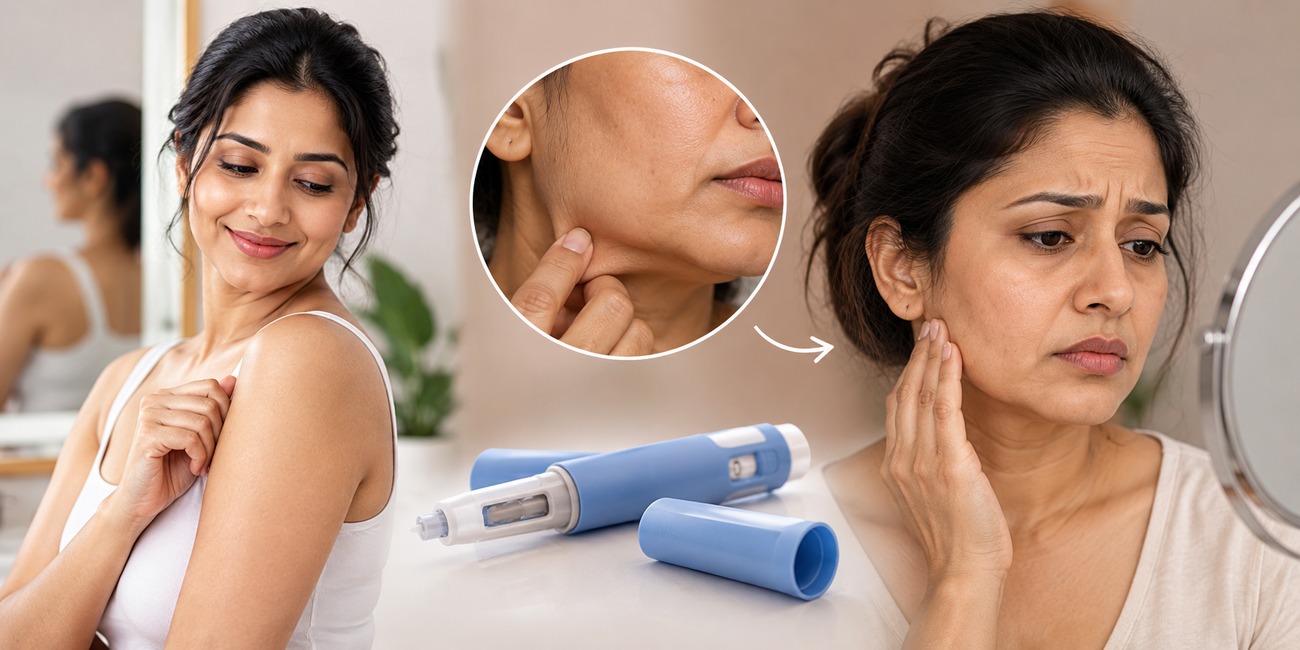
Ozempic Face & Skin Sagging: What Dermatologists Want You to Know
Rapid weight loss can bring noticeable changes to the body, but many people also see changes in their face. Ozempic face is a popular term used for facial volume loss, hollow cheeks, fine lines and loose-looking skin that may appear after significant weight loss while using GLP-1 medications. It is important to understand that this is generally linked to the loss of facial fat and the pace or amount of weight loss, rather than being a direct skin-damaging effect of Ozempic itself.
For some people, these changes are mild. Others may notice a more tired or aged appearance. The good news is that dermatologists can assess the cause and suggest treatments based on whether the main concern is lost volume, reduced skin elasticity, wrinkles or sagging.
What Is Ozempic Face?
“Ozempic face” is not a medical diagnosis. It describes facial changes that can happen following significant or rapid weight loss. When the body loses fat, some of that fat may also be lost from the cheeks, temples and other areas of the face.
Facial fat provides structure and helps support the skin. Losing this volume can make certain features more noticeable, including:
- Hollow or sunken cheeks
- Deeper facial lines
- Loose skin around the jaw
- More visible wrinkles
- Sunken-looking temples or under-eye areas
- A thinner or less youthful facial appearance
These changes are not unique to Ozempic. Similar effects can occur after rapid weight loss from dieting, bariatric procedures or other weight-management approaches.
Why Does GLP-1 Weight Loss Affect Facial Skin?
The relationship between GLP-1 weight loss skin changes and facial appearance is largely connected to losing fat and the skin’s ability to adapt to a smaller underlying volume.
As facial fat decreases, the skin may have less structural support. If weight is lost quickly or in a significant amount, the skin may not retract completely. Age, genetics, existing skin elasticity and the amount of weight lost can also influence how noticeable the changes become.
Recent dermatology literature has reported concerns including decreased facial volume, skin sagging, jowling and changes in skin quality among people undergoing GLP-1-associated weight loss.
Skin Sagging After Weight Loss
Skin sagging after weight loss can occur when the skin has been stretched for a long period and the underlying fat volume decreases. The face and neck may therefore look less firm, particularly around the cheeks, jawline and neck.
Maintaining good nutrition, adequate protein intake, hydration, sun protection and a consistent skincare routine can support overall skin health during weight loss. However, skincare alone may not restore significant lost facial volume.
Can Ozempic Face Be Treated?
Treatment depends on what is causing the change. A dermatologist first needs to determine whether the main issue is facial volume loss treatment, skin laxity, wrinkles or a combination of concerns.
Depending on the individual, options may include:
Dermal Fillers
Fillers can restore volume in selected areas where facial fat has been lost. They may help improve hollow cheeks, temples or other areas when appropriately chosen and administered by a qualified professional.
Skin Tightening Treatments
Energy-based procedures such as certain laser or radiofrequency treatments may help improve skin texture and firmness. These can be considered when laxity is a major concern. Dermatology guidance also lists laser-based treatments among options for improving wrinkles and tightening skin after GLP-1-associated weight loss.
PRP Treatments
Platelet-rich plasma (PRP) may be considered to support skin quality and address certain signs of aging. Dermatologists may use it as part of a broader treatment plan rather than relying on it to replace lost facial volume.
A Combination Approach
Some people have both volume loss and loose skin. In such cases, combining approaches may produce a more balanced result. Current expert guidance on GLP-1-related facial changes emphasizes individualized, multimodal treatment because patients can have different combinations of volume loss, laxity and wrinkles.
How to Manage Skin Changes During Weight Loss
You do not necessarily need to stop a prescribed GLP-1 medication because of cosmetic changes. Any change in dosage or treatment should be discussed with the prescribing doctor.
To support your skin during weight loss:
- Follow your doctor’s weight-management plan.
- Include sufficient protein and nutrient-rich foods.
- Stay adequately hydrated.
- Use broad-spectrum sunscreen regularly.
- Follow a consistent skincare routine.
- Consult a dermatologist if facial volume loss or sagging becomes noticeable.
When Should You See a Dermatologist?
If your face looks significantly thinner, hollow or saggy after weight loss, a consultation can help identify the actual concern. A dermatologist can evaluate facial volume, skin elasticity and the degree of laxity before recommending any procedure.
At Sarin Wellness, personalized dermatology and aesthetic treatment options can be considered according to your skin condition, facial structure and individual goals.
Conclusion
Ozempic face is usually associated with facial fat and volume loss following significant or rapid weight loss. While the changes can be frustrating, they are not necessarily permanent in appearance and can often be managed with appropriate skincare and professional treatments. Options for skin tightening after weight loss and facial volume restoration should always be selected after an individual assessment. If you are concerned about facial changes following GLP-1 treatment, consult the experts at Sarin Wellness for a personalized evaluation.
Frequently Asked Questions
1. What is “Ozempic face” and why does it happen?
Ozempic face describes facial hollowing, volume loss, wrinkles and sagging that may occur after significant or rapid weight loss. The primary factor is usually loss of facial fat and reduced structural support, rather than direct damage from the medication.
2. Can skin sagging from weight loss drugs be reversed?
It may be improved, depending on the amount of loose skin and facial volume lost. Dermatological treatments can address specific concerns such as laxity, wrinkles or volume loss, although results vary from person to person.
3. What treatments help tighten skin after rapid weight loss?
Depending on the individual, dermatologists may recommend energy-based skin tightening procedures, laser treatments, PRP or other aesthetic approaches. Treatment should be selected after assessing skin laxity and facial volume.
4. Is Ozempic face permanent or temporary?
The changes may persist when weight loss is maintained because the lost facial fat does not automatically return. However, the appearance can often be improved with appropriate aesthetic treatments and a personalized dermatological approach.